A strange smell inside a home can be difficult to explain. Sometimes it comes from a plumbing problem, damp materials, or a hidden animal. In other cases, opening a wall during an inspection reveals an unexpected pest problem that has been developing out of sight.
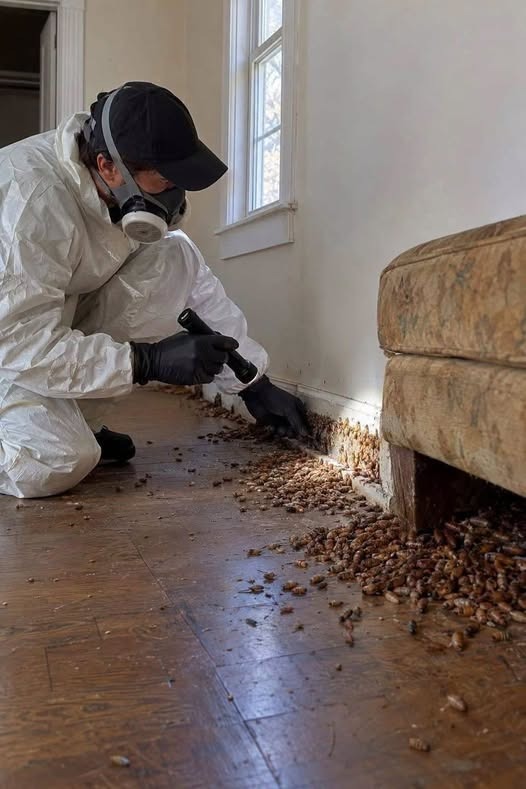
The photograph shows a person wearing protective clothing examining a large number of insects or insect remains gathered along a wall and beneath a piece of furniture. Although the exact species and the circumstances behind the image cannot be confirmed from the photograph alone, it highlights an important issue for homeowners: hidden infestations can go unnoticed until visible signs appear.
Why Might Insects Accumulate Behind a Wall?
Walls, floor gaps, and spaces beneath baseboards can provide shelter for insects. Depending on the species, these areas may offer access to food, moisture, warmth, or a place to establish a colony.
Some insects live inside wood or wall cavities, while others gather around openings, windows, or light sources. A large accumulation can sometimes indicate a nearby nest or infestation, but the appearance of the insects is essential for identifying the cause.
1. Termites Can Remain Hidden for Years
Termites are among the pests that can cause damage without being immediately noticed. Certain species tunnel through wood or build protected passageways along foundations and walls.
Possible warning signs include damaged or hollow-sounding wood, mud tubes, discarded wings, and large numbers of winged termites indoors. A professional inspection is recommended when these signs appear. <Cite refs={[“turn257472search0″,”turn257472search4”]}/>
2. A Dead Animal Can Cause a Powerful Odor
A persistent, unpleasant smell can also come from a dead mouse, rat, or other small animal trapped inside a wall or ceiling cavity.
As the animal decomposes, the odor may become stronger and linger for days or weeks. Flies or other scavenging insects may appear near the affected area.
However, an unpleasant smell alone cannot establish that a dead animal is present. Plumbing problems, moisture, and other sources should also be considered. <Cite refs={[“turn257472search10″,”turn257472search13”]}/>
3. Moisture Can Attract Pests
Leaking pipes, damp wood, condensation, and poor ventilation can create conditions that attract certain insects. Moisture can also contribute to wood decay and mold growth.
If an infestation is discovered, identifying and correcting the underlying moisture source can be just as important as removing the pests.
What Should Homeowners Do If They Find Something Similar?
If you discover a large number of insects behind a wall, avoid touching or disturbing the colony unnecessarily.
- Keep children and pets away from the affected area.
- Photograph the insects and any visible damage.
- Check for leaks or other obvious sources of moisture without disturbing potentially contaminated materials.
- Contact a qualified pest-control professional for identification and treatment advice.
- If the smell is strong, persistent, or accompanied by suspected sewage, gas, or chemical fumes, leave the area if necessary and contact the appropriate professional service.
Do not assume that spraying visible insects will solve the problem. If a colony or nest remains hidden inside the structure, the infestation may continue.
Can You Identify the Insects in This Photograph?
The image appears to show numerous small brown insect-like objects along the floor and wall, but it does not provide enough detail to confirm whether they are termites, cockroaches, another insect, or something else.
It is also not possible to verify the accompanying story about a man discovering them after noticing a strong smell. The image should therefore be treated as an illustration of a possible household pest problem rather than proof of a specific incident.
The Bottom Line
A strange smell in a home should not automatically be blamed on insects. Hidden pests, dead animals, plumbing faults, and moisture problems can all produce unpleasant surprises.
The safest approach is to identify the source before attempting treatment. When a large infestation or structural damage is involved, professional assessment can help determine what is happening and how to address it effectively.
Have you ever discovered an unexpected pest problem during a home repair? Share what you found and how you resolved it.