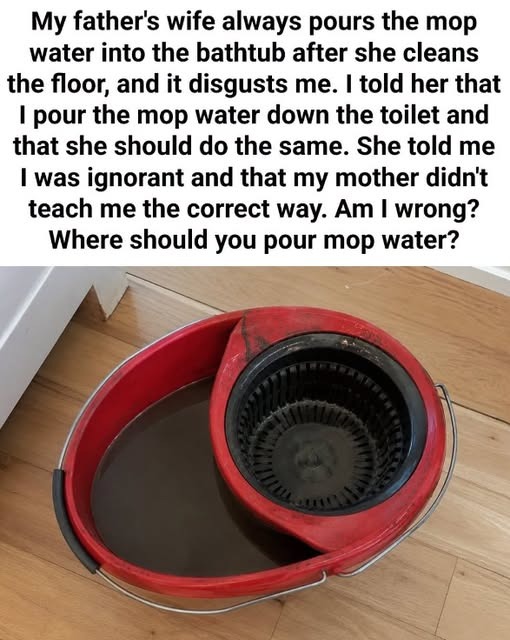
After mopping the floors, there’s one final chore that often gets overlooked: getting rid of the dirty water. It may seem like a small decision, but choosing the right place to empty your mop bucket can help keep your bathroom cleaner, prevent plumbing problems, and reduce the spread of dirt and germs.
Some people pour dirty mop water into the toilet, while others empty it into the bathtub or shower. Both options can work in certain situations, but the toilet is generally the better choice for ordinary dirty mop water, provided you can pour it safely without splashing. A bathtub or shower can be a practical alternative when it is suitable for the type of mess you’re cleaning up.
Here’s how to choose the best disposal spot and avoid common mistakes.
Is It Better to Pour Dirty Mop Water Into the Toilet or Bathtub?
For most household cleaning jobs, the toilet is a convenient place to dispose of dirty mop water. It is designed to carry away waste through the drainage system, and its bowl can usually be rinsed afterward with a flush.
The bathtub or shower may also be suitable, especially if the bucket is too heavy to lift over the toilet. However, these surfaces are places where people bathe, so pouring dirty water there can leave behind grime, unpleasant odors, or cleaning-product residue if the area isn’t rinsed thoroughly.
Your choice should depend on what’s in the water, the condition of the fixtures, and whether the water can be poured without spilling.
When the Toilet Is the Better Choice
Consider using the toilet when:
- The mop water contains ordinary household dirt, dust, and diluted floor-cleaning solution.
- The water doesn’t contain large pieces of debris that could block the drain.
- You can lift and pour the bucket safely.
- You can avoid splashing water onto nearby surfaces.
Pour slowly into the bowl rather than dumping the bucket all at once. A sudden rush of water can splash dirty droplets onto the toilet seat, floor, or surrounding area.
Afterward, flush the toilet and wipe up any splashes with an appropriate cleaner.
When the Bathtub or Shower May Be More Practical
A bathtub or shower can be useful if the bucket is heavy or difficult to position over the toilet. The larger opening may make pouring easier, and the shower can help rinse away ordinary dirt left behind.
If you use this option:
- Check that the drain is clear.
- Pour the water slowly to prevent splashing.
- Remove any solid debris rather than washing it down the drain.
- Rinse the tub or shower floor thoroughly.
- Clean the surface if needed, especially if the water contained strong cleaning products or visible grime.
Remember that the bathtub is not automatically a cleaner disposal option. It simply offers more room for pouring and rinsing.
What Is Actually in Dirty Mop Water?
The contents of your mop bucket matter more than the color of the water alone.
Ordinary mop water may contain:
- Dust and soil
- Small food particles
- Grease or oily residue
- Pet hair and other loose debris
- Diluted floor-cleaning products
- Bacteria picked up from household surfaces
Most routine mop water can be disposed of through an appropriate household drain, but water containing hazardous substances requires special care.
For example, water contaminated with paint, solvents, pesticides, concentrated chemicals, or other hazardous materials should not automatically be poured into a toilet, bathtub, or household drain. Follow the product label and local disposal guidance instead.
How to Dispose of Dirty Mop Water Without Making a Mess
Regardless of which fixture you choose, a few simple steps can make the job safer and easier.
1. Remove Solid Debris First
If the bucket contains leaves, clumps of hair, food scraps, or other solid material, remove them before emptying the water.
Place ordinary household debris in the appropriate trash container. Avoid pushing solids into the drain, where they may collect and contribute to a blockage.
2. Lift the Bucket Carefully
A full mop bucket can be surprisingly heavy. Use both hands, keep it close to your body, and avoid twisting your back while lifting.
If the bucket is too heavy, remove some water with a smaller container before carrying it. Never risk spilling dirty water or injuring yourself just to reach a particular drain.
3. Pour Slowly
Pouring gradually gives you more control and reduces splashing. This is particularly important when emptying the bucket into a toilet bowl or a small drain opening.
If the water is extremely dirty, pause if necessary and allow the drain to carry it away before continuing.
4. Rinse the Disposal Area
After emptying the bucket, rinse the toilet bowl or bathtub surface if appropriate. Wipe up any splashes and wash your hands.
If dirty water has landed on a surface that people regularly touch, clean that area with a suitable household cleaner.
5. Clean the Mop Bucket
Don’t forget the bucket itself. Empty any remaining water, rinse away dirt, and clean it according to the manufacturer’s instructions.
Allow the bucket to dry before storing it. Leaving dirty water inside can create unpleasant odors and allow residue to accumulate.
Should You Pour Dirty Mop Water Down a Kitchen Sink?
In most cases, the kitchen sink is not the first choice for dirty mop water.
The sink is used for preparing food, washing dishes, and cleaning items that come into contact with food. Pouring grimy water into it can contaminate the basin and surrounding surfaces, even if you rinse afterward.
A toilet or suitable utility drain is generally more convenient for ordinary floor-cleaning water.
If your home has a dedicated laundry sink or mop sink, that may be an even better option because it is designed for utility tasks. Check that the drain is suitable for the type of water you’re disposing of.
Can Dirty Mop Water Clog the Toilet or Bathtub Drain?
Ordinary diluted mop water usually drains without difficulty when the plumbing is functioning properly. Problems are more likely when the water contains excessive debris, thick sludge, grease, or material that should not enter household drains.
To help prevent clogs:
- Remove hair, food scraps, and other solid debris first.
- Avoid pouring thick mud or sludge into the drain.
- Never flush cloths, disposable cleaning pads, or mop fibers down the toilet.
- Don’t use the toilet to dispose of paint, solvents, or other products that require special handling.
If a drain is already slow or frequently backs up, choose another appropriate disposal point and address the plumbing issue rather than adding more waste.
What If You Used Bleach or Another Strong Cleaner?
If your mop water contains bleach or another cleaning product, check the label before disposal. Many diluted household cleaning solutions can be rinsed away according to their instructions, but concentrated products and specialized chemicals may require different handling.
Never mix bleach with ammonia, acids, vinegar, or other incompatible cleaners. These combinations can release dangerous gases.
If you accidentally mix cleaning products and notice strong fumes, coughing, burning eyes, or difficulty breathing, leave the area immediately and seek appropriate emergency or poison-control guidance. Don’t attempt to neutralize the mixture by adding another chemical.
When using cleaning products, follow the label’s dilution, ventilation, and disposal directions.
Common Mistakes to Avoid
Pouring Too Quickly
Dumping a full bucket at once can cause splashes and spills. Take your time, especially when using a toilet.
Sending Solid Waste Down the Drain
Hair, food scraps, mop fibers, and other debris can accumulate in plumbing. Remove them before emptying the water.
Leaving the Bathtub Dirty
If you use the tub or shower for disposal, rinse it thoroughly afterward. A quick pour without cleanup may leave a dirty film where people bathe.
Assuming All Cleaning Water Is Safe for Drains
Ordinary diluted floor-cleaning water is different from water containing paint, solvents, pesticides, or unknown chemicals. Check product instructions and local waste-disposal rules when hazardous materials are involved.
Forgetting to Clean the Bucket
A dirty mop bucket can develop odors and transfer residue to your next cleaning session. Rinse it and let it dry after use.
Frequently Asked Questions
Is it sanitary to pour dirty mop water into the toilet?
For ordinary household mop water, the toilet is generally a practical disposal option. Pour carefully, avoid splashing, flush afterward, and clean any surfaces that become contaminated.
Is the bathtub safe for disposing of mop water?
It can be suitable for ordinary household mop water if the drain is clear and the tub can be rinsed afterward. Remove solid debris first and clean the surface if grime or cleaning-product residue remains.
Can I pour mop water outside?
Not necessarily. Dirty water can carry detergent, grease, and other pollutants into soil, storm drains, or waterways. Follow the cleaning product’s instructions and local disposal rules rather than assuming outdoor disposal is harmless.
Should I empty mop water after every room?
You don’t always need to change the water after every room, but replace it when it becomes visibly dirty or stops cleaning effectively. Fresh water and properly diluted cleaner help prevent spreading grime from one area to another.
Can I pour mop water into a floor drain?
A suitable floor or utility drain can be convenient, provided it is connected to the appropriate drainage system and the water contains no prohibited substances. Avoid using storm drains for household cleaning wastewater unless local guidance specifically permits it.
The Final Verdict: Choose the Toilet for Most Routine Cleaning
For ordinary household mop water, the toilet is usually the simplest option, as long as you can pour safely and avoid splashing. The bathtub or shower is a reasonable alternative when it is easier to use, but it should be rinsed thoroughly afterward.
Whichever option you choose, remove solid debris first, pour slowly, clean the disposal area, and follow the disposal instructions for any cleaning products you used. These small habits make the final step of mopping easier, safer, and less messy.