-
Prep Time: 5 minutes
-
Cook Time: 6 to 8 minutes
-
Total Time: 12 to 15 minutes
-
Cooking Intensity Level: Low Heat (Gentle Precision)
-
Yield: 2 generous servings
Essential Kitchen Tools
Having the right equipment ensures smooth execution and prevents scorching:
-
Non-Stick Skillet: A high-quality 8-inch to 10-inch non-stick pan or well-seasoned cast-iron skillet is essential.
-
Silicone Spatula: A flexible, heat-resistant silicone spatula allows you to sweep along the bottom and curves of the pan effortlessly without breaking up soft curds too aggressively.
-
Whisk: A wire whisk introduces maximum air into the egg mixture prior to cooking.
-
Mixing Bowl: A glass or stainless steel bowl for thorough whisking.
Ingredients Checklist
| Ingredient | Quantity | Purpose / Notes |
| Large Eggs | 4 whole | Fresh, pasture-raised or organic eggs yield richer yolks and brighter color |
| Unsalted Butter | 1.5 tablespoons | Divided; cold butter adds richness and regulates pan temperature |
| Heavy Cream / Whole Milk | 1 tablespoon | Adds moisture and softens protein bonds |
| Fine Sea Salt | 1/4 teaspoon | Season to taste (added right before cooking) |
| Fresh Black Pepper | To taste | Freshly cracked produces the best aroma and flavor |
| Fresh Chives | 1 tablespoon | Finely chopped for a fresh, oniony finish |
Step-by-Step Culinary Instructions
Step 1: Aerate the Eggs thoroughly
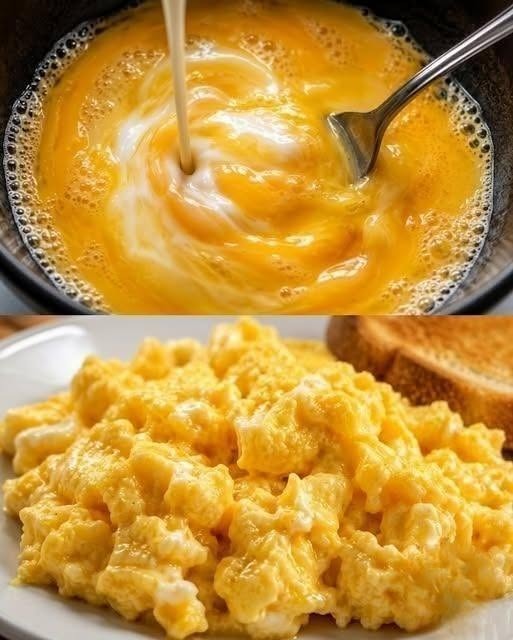
Crack the 4 fresh eggs into your mixing bowl. Add 1 tablespoon of heavy cream or whole milk. Using a wire whisk, beat the mixture vigorously for 60 to 90 seconds. You want to incorporate as much air as possible until the mixture becomes uniform in color, completely smooth, and slightly frothy on top.
Pro Tip: Do not add salt too far in advance. Adding salt minutes before cooking can break down the egg structure prematurely and make the mixture watery. Season right before pouring into the hot pan.
Step 2: Prepare the Pan (Low Intensity Heat)
Place your non-stick skillet on the stove and turn the heat to Medium-Low. Melt 1 tablespoon of unsalted butter in the pan. Allow the butter to melt completely and coat the bottom, but do not let it sizzle, brown, or foam intensely.
Step 3: Begin the Gentle Sweep
Season your whisked egg mixture with 1/4 teaspoon of fine sea salt. Pour the egg mixture directly into the warmed, buttered pan. Let it sit untouched for 10 to 15 seconds until the edges just begin to set slightly.
Reduce the heat to Low. Using your silicone spatula, slowly sweep from the outer edges toward the center of the pan. This action creates large, soft, ribbon-like curds while allowing liquid egg to flow onto the exposed hot surface.
Step 4: Temperature Regulation & Creamy Finish
Continue to sweep gently across the pan in long, continuous strokes every few seconds.
If you notice the eggs cooking too fast or forming firm curds:
-
Off-Heat Method: Lift the pan off the burner for 10–15 seconds while continuing to fold gently, then return to low heat.
-
Cold Butter Emulsion: When the eggs are about 80% set (still wet and glossy, with distinct soft curds), stir in the remaining 1/2 tablespoon of cold unsalted butter. The cold butter immediately lowers the pan temperature, stops overcooking, and melts into a rich, silky glaze.
Step 5: Residual Heat Plating
Remove the skillet from the heat when the eggs look softly set, shiny, and slightly undercooked. The residual heat remaining in the pan and the eggs themselves will carry them across the finish line to perfect cooked tenderness in under 30 seconds.
Gently slide or spoon the scrambled eggs directly onto warm plates or over thick toasted sourdough bread. Finish with fresh black pepper and chopped fresh chives.
Expert Tips for Perfection
-
Never Use High Heat: High heat evaporates liquid rapidly, causing rubbery curds and dry eggs.
-
Warm the Plates: Cold plates draw heat away quickly, turning soft eggs lukewarm and firm. Warm your serving plates in a 150°F (65°C) oven or under hot water prior to plating.
-
Experiment with Dairy: Swapping heavy cream for crème fraîche or sour cream right at the end introduces a subtle, delicious tang and ultra-creamy consistency.
Detailed Nutritional Profile
Nutritional values are calculated per serving (based on 2 servings per recipe):
| Nutrient | Amount Per Serving | % Daily Value (DV) |
| Calories | 225 kcal | — |
| Total Fat | 18.5 g | 24% |
| Saturated Fat | 9.2 g | 46% |
| Trans Fat | 0.3 g | — |
| Cholesterol | 395 mg | 131% |
| Sodium | 380 mg | 16% |
| Total Carbohydrates | 1.2 g | 0% |
| Dietary Fiber | 0.1 g | 0% |
| Total Sugars | 0.8 g | — |
| Protein | 13.5 g | 27% |
| Vitamin D | 2.1 mcg | 10% |
| Calcium | 68 mg | 5% |
| Iron | 1.8 mg | 10% |
| Potassium | 145 mg | 3% |